
Helping Neurodivergent Children Thrive: Why Nutrition Matters
When supporting children with ADHD or autism through nutrition two key areas are important to focus on: the gut and brain.
Many neurodivergent children experience high levels of anxiety. As the majority of serotonin – our ‘happy; neurotransmitter – is produced in the gut, it makes sense to start there.
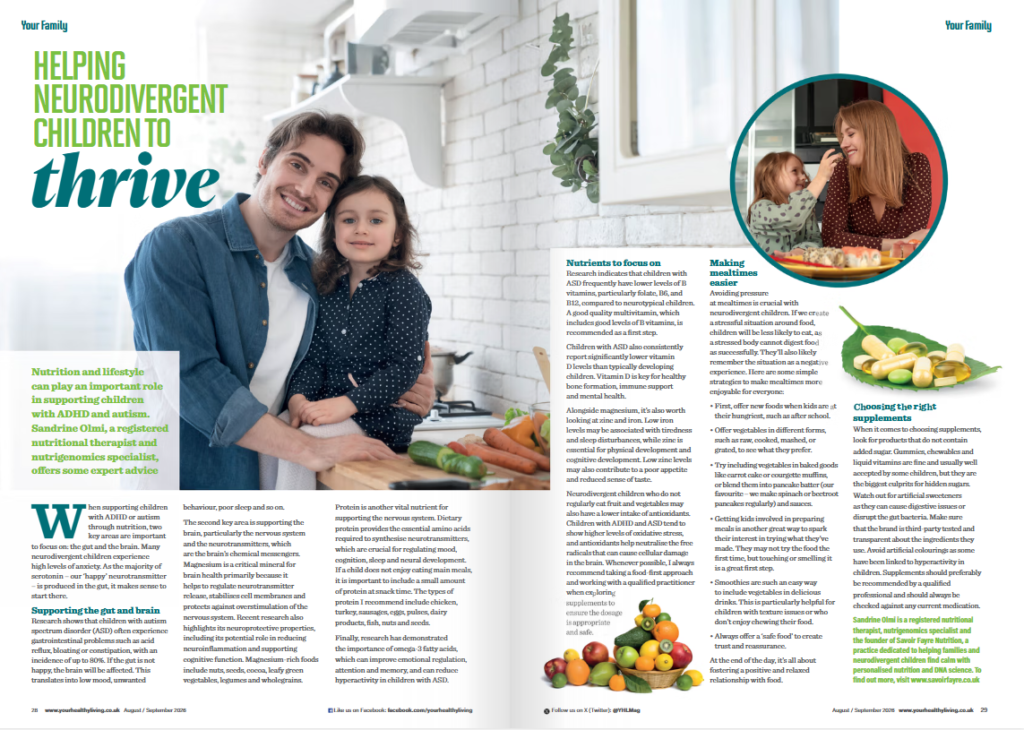
I was recently delighted to have the opportunity to share some of my thoughts on this in Your Healthy Living magazine, in an article exploring “Helping Neurodivergent Children to Thrive.”
Supporting the gut and the brain
One of the areas I find particularly interesting is the relationship between the gut and the brain.
We often think of the digestive system and the brain as completely separate, but they are in constant communication through what is known as the gut-brain axis.
This doesn’t mean that changing a child’s diet will “fix” ADHD or autism – it won’t. Neurodivergence is much more complex than that.
But it does highlight why it can be worth looking at the whole child, including their nutrition, digestion, sleep, energy levels and emotional wellbeing.
Nutrients to focus on
Children with ADHD or autism can sometimes have a more restricted diet, whether because of sensory sensitivities, food preferences, appetite changes or difficulties around mealtimes.
This can make it harder to consistently get a wide variety of nutrients.
Protein is particularly important because it provides the amino acids needed for many processes in the body, including the production of neurotransmitters. Healthy fats, including omega-3 fatty acids, are also important for brain health and development.
Other nutrients worth paying attention to include iron, zinc, magnesium and B vitamins, as well as vitamin D.
Research has highlighted nutritional differences and potential micronutrient gaps in some neurodivergent children, although every child is different and nutritional needs should always be considered individually.
This is why I don’t believe in a one-size-fits-all approach.
Rather than taking away lots of foods, I prefer to look at what we can add in, gradually increasing variety and nutritional value in ways that feel achievable for the child and their family.
Making mealtimes easier
For many families, the challenge isn’t knowing what constitutes a healthy diet. It’s actually getting a child to eat it!
If food is already a source of stress, putting pressure on a child to eat more vegetables or try something unfamiliar can sometimes make things harder.
Instead, think about reducing the pressure around food.
You might:
- Introduce new foods gradually, particularly where sensory sensitivities are involved.
- Allow them to explore food without expecting them to eat it.
- Get children involved in choosing, preparing or growing food where appropriate.
- Keep mealtimes predictable and relaxed.
And perhaps most importantly, try not to turn every meal into a battle.
Creating a calmer relationship with food is more important than getting the “perfect” meal on the table.
What about supplements?
Supplements can sometimes have a place, particularly where a child has a restricted diet or an identified nutritional deficiency. But more isn’t necessarily better.
It’s important to consider the child’s individual diet, needs and any medication they may be taking before introducing supplements. Where possible, I’d recommend discussing this with a suitably qualified practitioner or healthcare professional.
The aim should always be to fill nutritional gaps, rather than creating a long list of supplements and hoping something will make a difference.
Looking at the bigger picture
Supporting a neurodivergent child isn’t about finding one magic food or supplement. It’s about looking at the whole picture.
Food is one part of that, alongside sleep, movement, relationships, emotional wellbeing, sensory needs and the environment around the child.
And sometimes the most helpful nutritional change isn’t adding another “healthy” food – it’s taking some of the pressure away from mealtimes and helping a child feel safe and comfortable around food.
A personalised approach: nutrigenomics
This is also where my interest in nutrigenomics comes in.
Nutrigenomics looks at the relationship between our genes and nutrition – essentially, how our individual genetic makeup can influence the way our bodies respond to certain nutrients and dietary patterns.
It’s an emerging area, and it’s not about using genetic testing to diagnose or “cure” ADHD, autism or anxiety. Instead, it can provide another piece of information when thinking about an individual’s nutritional needs.
For families who feel they’ve tried everything and want to understand their child’s nutrition from a more personalised perspective, this can be an interesting area to explore.
Every child is different, and there is no single “ADHD diet” or “autism diet” that works for everyone. My approach is about understanding the individual child, taking the pressure out of food where possible, and finding practical ways to nourish them and help them thrive.
You can read the full article in Your Healthy Living magazine (pg 28). If you’d like support with your child’s nutrition, please get in touch to find out how I can help.
About Sandrine
Sandrine is a Registered Nutritional Therapist (mBANT, rCNHC), Nutrigenomics Specialist, and mum of an AuDHD daughter. She runs Savoir Fayre Nutrition Clinic and The Feeding Calm podcast for parents of anxious and neurodivergent children. Her approach puts reducing anxiety around food before everything else, because calm always comes before nourishment.
savoirfayre.co.uk